Tampilkan postingan dengan label gluten free. Tampilkan semua postingan

Kamis, 19 Januari 2012

Kimchi (Napa Cabbage and Bok Choy) and Fermented Radish & Kale [Paleo][Low Carb]

Kimchi is a traditional Korean dish of spicy fermented cabbage. Napa cabbage, usually. An excellent example of the power of the wisdom in traditional diets, kimchi combines the "superfood" elements of cabbage with those of onion and cayenne. As I have mentioned previously,

Cabbage:
  • protects against a wide spectrum of cancers
  • is a great source of glutamine
  • is healing to the digestive system
  • has a mild cholesterol lowering effect*
  • provides antioxidants
  • is a good source of vitamins A, C and K, and anti-inflammatory polyphenols.
The George Mateljan Foundation has an in-depth summary of the health benefits of cabbage and kale. A particular cabbage glucosinolate, sinigrin, has been the focus of anticancer research. In addition,

Kimchi:
  • provides additional detoxification benefits due to the high sulfur content of onions and garlic
  • boosts metabolism (cayenne)
  • provides more vitamin A and C (cayenne)
  • helps lower cholesterol* (cayenne)
Fermented foods like kimchi are a great source of "good" gut bacteria. When made properly with salt or whey (lactofermentation), kimchi and sauerkraut provide an especially important and less common bacterial strain, L. Plantarum. It is one of the few flora strains which sticks to the intestinal wall rather than being processed out by the body like other strains of "good" bacteria. Lactic acid produced in traditional fermentation is one of the most valuable organic acids since it can be used in the body more immediately than other important fermentation by-products like acetic acid.

My kimchi is based on Dr. Ben Kim's recipe. Dr. Ben Kim, from whom I adapted this basic recipe, focuses on the use of Napa cabbage and gives a great pictorial step by step method of traditional kimchi. As anyone who knows me can vouch, however, I cannot follow a simple recipe and have thus fermented a few other varieties of my own "kimchi" using kale and bok choy. Who can pass up such vibrant vegetables in the produce section? Certainly not me, though it would be better if they were growing out of my garden...


Ingredients for the Napa Cabbage Kim Chi: (substitute Bok Choy for Napa cabbage below for the Bok Choy version)
  • 1 large Napa cabbage
  • 1 bunch fresh scallions
  • onion, yellow chopped
  • garlic, minced. I used about 5 cloves
  • 1-2 T. salt (use the second T. salt if not using whey)
  • 1 T. cayenne powder
  • ~1/4" chunk fresh ginger root
  • 1 organic green apple (to puree) or applesauce, unsweetened
  • optional: 2-3 T. sea vegetable flakes

Ingredients for the Fermented Kale and Radish 'Kim Chi':
  • 1 large crisp bunch kale
  • ~ 5 radish
  • onion, yellow chopped
  • garlic, minced. I used about 5 cloves
  • 1-2 T. salt (use the second T. salt if not using whey)
  • 1 T. cayenne powder
  • ~1/4" chunk fresh ginger root
  • organic green apple (to puree) or applesauce, unsweetened
Procedure:
  1. Chop up the Napa cabbage, bok choy, and kale into bite sized pieces. Place in separate bowls. Note: Dr. Kim states that the brassicas shrink about a quarter in fermentation so the end product will have smaller pieces than it initially seems.

    Chopped raw Napa cabbage (L), kale (C), and bok choy (R)

  2. Thinly slice 4 oz. of the radish and either chop or slice the onion. Measure out or pinch desired amount of kelp or other sea vegetable. Set aside.
  3. Measure out 1/4 c. sea salt.* I used Celtic sea salt but really all you need is a basic pure salt and preferably without fillers which will cloud the final fermented product. The Celtic sea salt is a great source of trace minerals and is unrefined. It is not processed with chemicals or at high heat which can damage the healing properties of the salt as many commercial salts are. This brand in particular is "doctor recommended" if that is important to you. *Note: Salt such as Celtic sea salt or table salt with with iodine will slow fermentation. Use pickling salt (iodine free canning salt) if you would like a shorter 2-4 day room temperature fermentation. (Thanks Ima for clarifying that!)
  4. Dissolve the sea salt into warm water and then add the brine to the cabbage batches. Mix the brine and cabbages. I wore gloves so the salt wouldn't sting however the salt is very healing for the skin and will naturally exfoliate and gently detoxify the skin with its astringent quality.

    Salting the cabbage

  5. Cover the salted cabbage batches and let sit at room temperature for about four hours. If it is significantly cooler in your kitchen then you can let it sit a bit longer.
  6. After 4 hours, rinse squeeze dry.

    After 4 hours of salting: Napa cabbage, Kale, and Bok Choy. Rinse well and squeeze dry (far right)

  7. Measure out 1/4 c. cayenne powder or red chili flakes/powder. Mix with warm water to make a paste.

    Make the cayenne paste

  8. Mince and/or sliver fresh garlic and ginger. Measure out your T. garlic and ginger (I used a hefty scoop of organic bottled ginger and slivered some of my garlic and minced the rest in the Vitamix later).
  9. Slice the green onions. I do so at an angle for visual appeal.

    Prep the ginger and scallions.

  10. Puree a few Vitamin C tablets (not necessary but they keep the mix from browning. Lemon juice could also be used I suppose), the cored organic granny smith apples, about 2/3 of the onion, and the remaining 4 oz. of radishes in the Vitamix with 1/2 c. water to make a natural sugar substitute for the cabbage to use as food for fermentation. Note: Dr. Kim's recipe uses apple, pear, and onion but I didn't have pears plus I wanted to add radish and my own twists (read: I can't follow a recipe to save my life, ha!). This puree is the replacement for white sugar, the fermentation food in commercial kim chi and fermented vegetable varieties.

    Slice the radish and onion. Puree the apples, remaining radish, garlic (if not minced), and onion with water and Vitamin C for fermentation sugar base.

  11. Add the kelp (sea veggie)*, sliced scallions, onion, cayenne/ginger/garlic paste to the kimchi base (the rinsed brined cabbage). Add about 1/3 of the apple puree, the green onions, and the red chili paste and ginger to each of the cabbage batches. You will have to make a full red chili paste batch as in step 7 for each cabbage batch (one for Nappa, one for bok choy, and another batch for the kale). *Again note that the high mineral (iodine) content of the sea vegetable will slow fermentation a bit.
  12. Mix well with gloves.
  13. Using a wide mouth funnel (such as a canning funnel made for Mason jars), spoon the kimchi into sanitized glass jars. Leave some head space (a little room) at the top for expansion as the brined mixture ferments. Leave the jars out at room temperature for at least 24 hours before refrigerating. I actually leave my fermented vegetables out longer than this personally, but for spoilage sake I would recommend 24 hours if you are inexperienced. Otherwise if you are wise in the ways of the age old tradition of fermentation use your best judgement.
  14. Enjoy it! The refrigeration process slows the fermentation, though the batch will slowly continue to cure and become more sour with time.

Kelp and Sea vegetables are high in healing polysaccharides (long chain sugars) and nutritious whole foods.

Kelp and Sea vegetable benefits include:

  • thyroid support through bioavailable trace minerals (most notably iron and iodine)
  • high antioxidants
  • natural cholesterol lowering effects*
  • vandium, an essential component in nutritional support for diabetics/pre-diabetics which helps to regulate blood sugar
  • fucoidan polysaccharides. Anti-inflammatory, antivirual, and high in sulfur like the raw garlic and onions added to the kimchi. David Wolfe's new video on polysaccharides discusses how certain polysaccharides protect against strains of the herpes virus.
*Much research supports the fact that low cholesterol is not a preventative measure for heart disease. For women, the higher the cholesterol the better since the cholesterol-hormone interaction and blood sugar versus fat is more prominent in women (especially post menopausal women) than men. The Weston Price foundation has many research articles on the benefits of high cholesterol including how high cholesterol increases longevity.

Though kimchi is a delicious superfood, don't overdo it on cruciferous vegetables (cabbages, kale, collards, broccoli, etc) since they can slow the thyroid if overeaten. Raw and fermented cabbage contains goitrogens which block thyroid hormone production. The natural iodine and minerals in the sea salt and sea vegetable will help to balance the goitrogen effects, however fermentation actually activates the goitrogens. The Weston Price foundation says the following on fermentation and the "dangers" of goitrogens in crucifers:
Fermentation of sauerkraut actually activates the goitrogens from their precursors. It also has the beneficial effect of reducing the nitrile content to half of what would be generated by cabbage upon digestion. Since nitriles appear to be more toxic than goitrogens and their effects cannot be mitigated by dietary iodine, the overall effect of fermentation is positive. More importantly, if sauerkraut is used as a condiment, the amount of goitrogens consumed is very low and very unlikely to exert any harm. However, it is important to realize that unreasonably high intakes of sauerkraut could have adverse effects.
'Nuff said. Now feast your eyes and then ferment up some veggies to feed your tummy! Don't forget hearty winter greens are a great source of vitamin C and vitamin K (though not as good of a vitamin K source as animal products like raw butter).


slideshow

Rabu, 26 Oktober 2011

Green "Muffins" [Paleo][Low Carb]

Want a healthy Halloween appetizer, snack, or just a plain old hearty munchie? Try some ghoulishly green muffins (don't fret they're just spinach egg muffins).  I was trying to find a good Cindalou option for a Halloween party dish and Jon suggested that I just make some of my normal food- something gross looking and green goo-ish.  For once we agree ;)


I adapted this recipe from Steal This Meal Spinach Egg Muffins, though I have made similar in the past with coconut flour.  This time I added egg whites (since I had them) and used my Vitamix (since I'm lazy).  Steal this meal also has a nice kale recipe for those kale fans out there... that's me, of course.   They have a great Paleo recipe and lifestyle site so check it out.  No, I don't know them I just like their stuff.  Not everyday you can mash the superfood vitamin and mineral packed bags o' spinach and farm fresh free range eggs into a Paleo party bite.  Well, around here it is an everyday thing...  You can almost sing the alphabet in vitamins in this dish- give me a "A," "K," "MaGNESIUM."  Not to mention bioavilable B12, choline, selenium.  You get the idea.  Alas, onto green goodness:

Ingredients:

6 whole fresh eggs
1/4 c. dried egg whites (or 6 egg white equivalent or just more eggs) + water (see below)
3 cloves raw garlic
3 lbs. frozen spinach
1 T. lemon juice (optional)
sea salt and pepper, to taste (about 2 t.-1 T. each)
spices to taste: I used ~1 T. crushed red pepper, Italian seasoning, and 1 t. cayenne)
2 T. extra virgin olive oil
    Preparation
    Steam the 3 lbs frozen spinach with 1 T. water and 1 T. lemon juice (if desired) until vibrant green but soft and cooked (7-10 mins depending on temperature). Set aside and let cool. 

    Line muffin cups and spray with nonstick spray or coat with coconut oil (or real butter). Preheat oven to 350 degrees. 

    In the Vitamix (or your blender) add the powdered egg whites (I used 1/4 c. dry egg whites= 6 egg whites of the Deb El Just Whites brand) and water (1/2 c. then additional 1/4 c water to make smooth consistency) and blend on low until dissolved (1-2 minutes, varying speed). 


    Using a jam press or slotted spoon drain the spinach until very dry. I also used my flat fold colander to help squeeze out all the liquid, though hands work fine also. 

    Add the spinach to the egg white-water mixture in blender. Blend on medium for 1 minute to help mix. Add 6 raw eggs. Add garlic and spices (also pepper, 1 T. Italian seasoning and 1 T. crushed red pepper) and extra virgin olive oil. 


    Blend on medium mixing with Vitamix damper. When well mixed (2-3 minutes) turn to high and mix vigorously until well blended and bright green (my favorite!) Spoon into muffin cups and bake at 350 for 15-17 minutes or until toothpick comes out clean.


    Best toppings (as if they need 'em): raw organic almond butter or coconut oil (butter for ya'll dairy folks out there).  Actually a kalamata olive would go nicely too...

    Yield: About 22 medium "muffins" (I swae that count is before I ate half the batch!)
    I added this recipe to Nutrition Data for the stats and label: 


    Army of green goblin goodness... ahh yum!


    Cindalou's Kitchen Blues: Healthy Celiac / Coeliac Gluten and Dairy Free Recipes

    Rabu, 16 Februari 2011

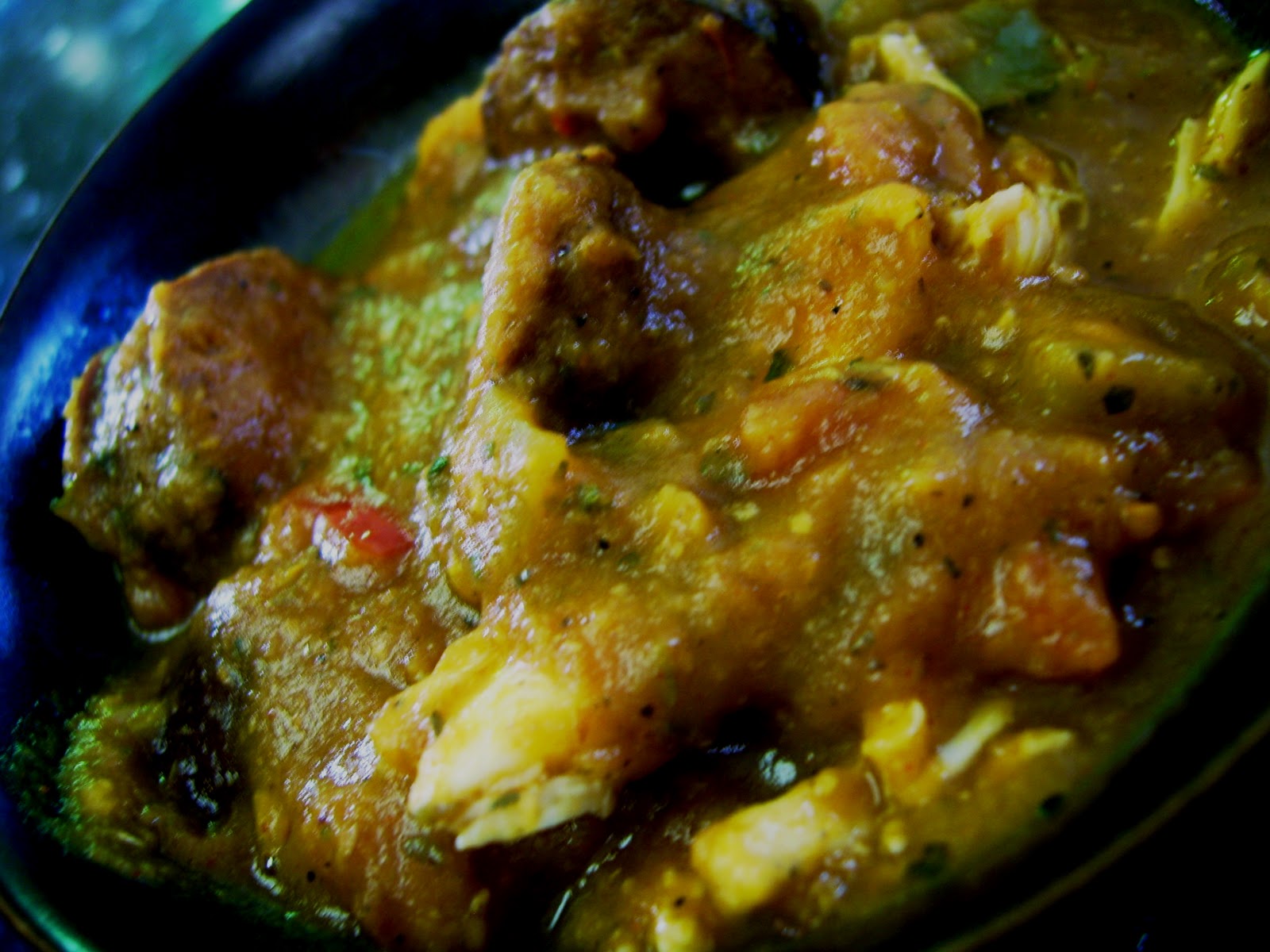
    Mexican Pumpkin and Turkey Sausage and Shredded Chicken Stew [Low Carb][Paleo]

    Cindalou's is hitting the road (hoping it isn't still iced over on our killer mountain driveway!) with a spicy low carb stew to warm even the coldest of frozen toes and fingers. It's Mexican theme at girls' night this weekend and I wanted to bring something with a little variety. For a small handful of ladies, there are enough Mexican dishes already there to feed a small Army... or a large one. All the classic Mex entrees and sides are already taken- beans, guacamole, taco salad, chalupas, quesadillas, flan, dips, and chips galore! I thought something a little different would be nice. Well, that and the fact that the hubby just bought a case of organic canned plain pumpkin from an Amazon deal last month! That's a whole lotta pumpkin for two. My stew is a variation on a common Tex-Mex pumpkin chowder, but I omit the high glycemic corn and use low carb substitutes with much more nutrition.


    As you recall, pumpkin is a great low carb winter "superfood," packed with Vitamin A, C, E, magnesium, iron, and a host of other minerals. One common mistake: be sure to use the plain pumpkin, not the pumpkin pie mix!

    Cilantro is a fantastic herb for detoxing the body of heavy metals. It is also a great source of B vitamins, zinc, and selenium as well as a host of other vitamins and minerals. In general, dried herbs are nutritionally dense foods, though potency of certain nutrients can be lost in the drying process.

    Tomatoes and salsa provide more Vitamins A and C (better than oranges, plus less sugar), and the organic coconut milk and virgin oil provide brain nourishing and metabolism boosting medium chain good fats (the MCTs). Don't fear the coconut fat, it is burned as fuel for and repairing the body, not stored like longer chain polyunsaturated fats (bad fats like soybean, corn, and peanut oils to name a few). Vitamins A, C, E and the B assortment help strengthen your immunity in these blistery wintery days. Don't reach for a pill or softgel for health either- your body knows how to assimilate and nurture itself with vitamins and minerals from real food. Those supplements have their place but shouldn't replace basic real food... hey, you can always start with a big dollop of my warm spiced up stew! :)

    Note: The turkey sausage is optional for vegetarians or vegans. For a non-Paleo ("Caveman") version add black beans. I just had a pack of gluten free Andoullie turkey sausages on hand and I wanted to combine the ideas of a typical Mexican pumpkin soup with a Brunswick stew. (Brunswick stew is out for us kosher southerners who don't do pork).


    2 15 oz cans organic pumpkin (not pie mix)
    1 15 oz can organic coconut milk
    3/4 c water (or low sodium free range organic chicken broth- adjust for your consistency preference)
    1 15 oz can Rotel tomatoes, Mexican Style Lime and Cilantro OR 1 15 oz can organic fire roasted tomatoes with green chilies (undrained)
    1 7 oz can green chilies, drained
    1/2 c. hot salsa (Kroger brand is gluten free according to the last list

    1 T. organic virgin coconut oil
    1 package Andoullie turkey sausage (I used Garrett Farms brand gluten and antibiotic free sausages)
    2 large boneless, skinless chicken breasts, shredded before serving (see below)
    lime juice, to taste (I usede about 1/4 c)
    stevia glycerite,~ 1 T.
    1 tsp organic unsulfured blackstrap molasses (great vegan source of iron and B vitamins), optional


    spices:
    cilantro, ~ 2 tsp
    sea salt and pepper, dash each
    cumin, ~ 2 tsp
    cumin seed, pinch of whole seed braised with pestle and mortar
    oregano, ~ 2 tsp
    thyme, ~ 1 tsp
    Badia curry powder (it is gluten free, I asked the company and posted the reply on Celiac Forums at the end of the thread), ~ 1 T.

    garlic powder and onion powder, ~ 1 tsp each
    turmeric, ~ 1 tsp
    parsley, ~ 1 tsp
    paprika and cayenne pepper, ~ 1 tsp each
    pinch crushed red pepper flakes (for color)


    optional: 1 Reynold's slow cooker liner (makes for easy clean up)*

    Preparation:
    Line your slow cooker with the liner if you choose to use it.* Add the coconut oil and turn to high to melt the oil and swash it around the bottom (you can also spray the cooker or liner). Add the chicken breasts to the bottom. Add the pumpkin, undrained Rotel or fire roasted tomatoes, and coconut milk. You may wish to thin the stew with either water or organic free range chicken broth. Stir to mix well, though leave the chicken on the bottom. Cook on high for 3 hours. Check the chicken breasts with a fork and shred them a bit into large shreds if you can (to preserve the texture). My breasts were still a bit raw so I did most of my shredding at the end.


    Since the sausages are already precooked and I didn't want them to get mushy, I decided to wait to add them until after the chicken had cooked a bit. The sausages can be sliced into bite sized pieces now and added to the stew. Or if you prefer, the whole sausages can be fished out at the end and sliced, though that method is a bit messy. Add the rest of the ingredients: broth or water, the drained green chilies, spices, lime juice, and salsa. Stir well. Cook on low for another 3-4 hours or until chicken is fork tender and shreds easily. Adjust the lime juice and cayenne to suit your taste. You can always cook it all on high for a shorter time as long as the chicken is well cooked. Since I have the time I wanted to let the spices and flavors simmer on low for the last few hours and "marinate" rather than just throw it all in on high for shorter.

    Alternative Method (The Quickie): Throw it all in and cook on low for 6 hours or until chicken is fork tender and shreds easily.

    Shred the chicken (and slice sausages if not done previously) before serving. This goes great with some guacamole or avocado and a dollop of (nondairy) sour cream (I would use my homemade coconut milk or cultured (fermented) soymilk 'yogurt'). Garnish with fresh chopped cilantro and dig in!

    While this stew has a nice spice to it, feel free to experiment with spice amounts. I prefer things fiery myself :) Don't forget cayenne pepper and those healthy coconut MCTs help reduce inflammation and rev up that sluggish winter metabolism, while pumpkin and tomatoes give a low carb and low glycemic vitamin and mineral punch. Keeping up your immunity naturally and holistically with healing, warming foods and proper exercise helps balance the body. Now go run in place as hard as you can for 1 minute- burst train and stretch those lungs and achy legs! Whew, now I'm all warm and toasty!

    Other add ins that would be nice are 1 c. chopped white onion and diced tri bell peppers like a frozen mix of veggies and chunks of celery and torn bits of kale. I didn't have any on hand at the time though, what a shame to miss kale!!

    Note: This was not spicy enough for my taste, but a T. or so more cayenne would help.


    *Note on the slow cooker liner: It does not give material but I can tell it is some form of plastic which has been apparently "approved" as food grade. I am skeptical about the liner (as well as the ceramic Crockpot) leaching into the food (acids and fats tend to degrade plastics and break them down into possibly toxic by-products like dioxins and PCBs). However since I am traveling with this whole shebang, I wanted a quick and cleaner way to transport this stew. Yes, even Cindalou up on her health soapbox chose convenience :)

    Cindalou's Kitchen Blues: Healthy Celiac / Coeliac Gluten and Dairy Free Recipes

    Kamis, 06 November 2008

    Excellent Blogs + Spiced Vegan Chai Cocoa

    Sorry for the uber long delay here! Thank Cheryl over at Gluten Free Goodness for dragging me out of the blogging closet with her nomination of Cindalou's for an Excellent Blog Award. I begrudgingly (and gratefully, I might add) brushed off our basement office mold and dust to peck yet again at the keyboard. (This time it is not for calculations of the rate of matter spiraling into a black hole or deriving the gauge transformation with the trace reversed metric perturbation ... sorry, that's GR speak polluting my brain from our midterm exam).


    This time, however, I can share goodies about Cheryl and her nutrition-packed gluten, dairy, soy, egg, and corn free (whew!) kitchen. Hey, that beats the heck out of ion implantation stuff. How can Neon ions compare with her pesto? Admittedly, I'll need to nut-free that pesto for myself with a heaping pile of extra kalamata olives, but that garlic-y pesto looks deliciously green and appetizing. Alternatively, you may prefer Cheryl's creative Pesto-ed Fish, featuring garlic scapes. If you like healthy allergen free recipes with tons of fresh garden produce, I recommend Cheryl and re-nominate her for an excellent blog award. I don't know if that's possible, but rules are just guidelines anyways ... especially when they come between garlic pesto fish and myself. As an organic gardener and cook, Cheryl makes excellent dishes with seasonal produce. If you have a bumper crop of pears, basil, or veggies, then check out her concoctions for dinner ideas!


    Here's the spiel:

    The rules that accompany this award are as follows:

    “Please find at least 10 more blogs of any kind which you deem to be excellent; but hey if you only come up with 3 or 5 (I chose 8), I don’t mind. Post about the blogs you picked, linking back to me and to them. Once you’ve posted, return here to let me know your post is up, and of course let your 10 award winners know too."

    Cindalou's "Excellent Blogs":

    Gluten Free For Good
    : Pumpkin anyone? Beets and Greens? Melissa over at Gluten Free for Good has a fantastic blog (and website) that extends beyond the gluten free community, as she lends her nutritionist expertise to everyone with an ear to hear (eye to read?). Seasonal ingredients (with recipes!) punctuate the health posts and exposes on hot nutrition topics. Melissa also knows how to have a good time, as she often shares her beautiful photos taken while hiking the Colorado wilderness. I can admire those sharp mountain peaks from afar, drool over her Pumpkin Pancakes, and laugh out loud at her humorous rantings on nutritional disasters and the advertising conspiracy. If you haven't seen the high fructose corn syrup commercials yet, read her comments on it and the role of sugar in modern diets versus health. If you have a sweet tooth, don't despair! Even as a bonafide health professional, she makes sweet amends and provides recent Celiac health & nutrition conference updates to the rest of us *unprivileged* non-health pro invitees.

    Gluten Free Mommy: Unfortunately Natalie is out of the kitchen blogosphere right now due to her pregnancy (what a great reason, yey!), but GF Mommy is one of my favorite (and NC local) blogs. Her fish stew is reminiscent of one of my favorite quick healthy recipes for cool nights, and her beautiful pictures of gluten free cakes make me pine for dairy and a trip to Raleigh :). Also, if you enjoy Indian food as much as I do, you don't want to miss Natalie's bombay chicken and kung pao chicken. Update: She posted a fantastic Thanksgiving Frozen Pumpkin Pie which looks oh-so-tempting (once dairy-freed, of course).

    Book of Yum: Although Sea is already an "E" blog as well, I'm going to jump aboard and give Book of Yum another vote. How could I forget such an expansive multiple-allergen friendly food blogger with a kindred appreciation for turmeric and spinach? I love the exotic Asian-inspired and Indian dishes from Book of Yum, as well as the focus on creative and often vegetarian and/or vegan recipes. Her uncheese nutritional yeast dairy free spinach pie and recent poppy seed goat cheese beet salad are calling my name (darn that goat cheese!). If you are adventurous in the kitchen, check out Sea's creations for great bento (lunch box) and dinner idea. Sea also gives many nondairy (often soy or nut based) "butter" and "cream" recipes for dairy-intolerant individuals like myself.

    Great Mastications: Orla dishes up some great gf healthy recipes with a serious Canadian appreciation of healthy hemp, as well as teaching all of us a little more common sense about sustainable green living (see her post Green Business for a great "Stop buying crap we don't need" read). Come spring and summertime, I'll be gorging myself with her hemp seed and green onion dip, mmm!

    Gluten Free Bay
    : Fall is brimming with holiday opportunity to try out a few of the Bay's plethora of creative kosher gluten free recipes. I am looking forward to some matzo balls for chicken soup and some low glycemic sweet potato and leek latkes. If you keep kosher and juggle allergies, the Bay is an invaluable resource for recipes and product updates!

    Caveman Food: Elizabeth serves up great Paleo meals like the Sam I Am Eggs (told you Mom!) and Lamb Meatballs. For everyone on a low carb or cavemen-esque diet, I highly recommend her site. It's easy to get stuck in a rut on a low carb diet and eat the same ole ho-hum food, but Elizabeth's meals can appetize the low carber and regular diner alike. Who doesn't like (gluten and dairy free!) chicken fingers? Don't forget your vegetables either! Vital to health and the low carb and Paleo lifestyles, Cave(wo)men do eat their veggies! Restricted diets can be hard without further limiting food groups voluntarily, so check her out for gluten free, dairy free, low carb/Paleo meals.

    Aprovechar: I know everyone else has given Sally an "E" already, but I must chime in. Sally's recipes are great healthy recipes for anyone looking for allergen free weight loss dinner ideas, but the real sparkle in her blogging comes from her heartfelt discussions regarding her life experience. Sally harbors the genuine glow of someone who has overcome traumatic health problems through an inspiring recovery. I know many people who can fake optimism, but Sally really has a true light shining from her soul. Besides, she makes tempting gluten free vegan Mesquite Chocolate Chip Cookies featuring flax seed (horrah!) to munch while you ponder enlightenment.

    Jeena's Kitchen: Mediterranean cuisine (not all gluten or allergen free) with tons of delicious photographic recipes with everything from lamb and fish to traditional vegetable curries and desserts. The lamb dishes are always some of Jon's favorite objects 'o drool, like her lamb mint meatballs (use gf bread or ground flax).

    I'm sure I missed a few excellent gluten free blogs, so my apologies. Other top authors are Cathy Wong and Dr. Ben Kim, both very knowledgeable alternative health authorities and creative cooks. Dr. Ben Kim even has a healthy corn syrup and HFCS free pecan pie recipe stocked full of delicious dates for the holidays! All of these yummy blogs are stirring my appetite for a nice warm mug of cocoa ...

    Spiced Vegan Chai Cocoa
    [low glycemic to boot]


    The onset of brisk cold nights here in NC drags out a plethora of random herbs and unsweetened cocoa powder for a nightly rendevouz with my otherwise shivering hands. I have to make all my own cocoas since commercial AND affordable varieties come complete with a) corn syrup, b) dairy ... and more derivatives of dairy, and c) tons of other crap.

    Unsweetened non-dutch processed cocoa is not treated with alkali and is all we use at Cindalou's. Why no dutch processed cocoa? The dutch processing destroys most of the flavonols present in cocoa, as discussed in this Chocolate as a Health Food article. Besides, addition of unnecessary metals to perfectly good cocoa for a milder taste seems .. unnecessary. Curious minds can find a concise description of the sundry varieties of chocolate and cocoa at this Wikipedia site.

    All of the cocoa details aside, if you want quick and easy homemade vegan cocoa, gather any combination of the following herbs and ingredients and stir away! (The amounts are approximate, and as such, this is barely a recipe at all. This is an herb-y cocoa based on my old slippery elm tea of healing warmth.)


    • 2 T. unsweetened non-dutch cocoa powder

    • 4 drops liquid Stevia (if desired) or agave/honey to taste

    • 1 t. slippery elm - various soothing digestive actions, high in iron and vitamins, helps kidney problems, diarrhea and constipation (similar action to psyllium)

    • 1 t. cayenne pepper - arthritis, pain relief (internal & external), soothes & improves digestion, metabolic booster

    • 2 t. cinnamon - antifungal, antibacterial, improves glucose metabolism (diabetes), anticlotting, helpful for memory

    • dash ground ginger - excellent nausea and digestive aid, antiinfammatory, aids in prevention of cancer, immunity booster

    • 1 t. crushed fennel seeds - very high in Vitamin C, improves immunity, high in folate (a B vitamin) and fiber, helps keep the colon and heart healthy
    • dash ground fenugreek - high in fiber and amino acids, lowers cholesterol and regulates blood sugar, helps soothe digestion, loosens mucous, can stimulate the sex drive, and has an interesting folk use for breast enlargement. It also improves milk flow from nursing mothers, may help fight obesity, aids in heart disease, and can ease menstrual pain. It should not be used in high, frequent doses, or by pregnant women

    • 1 t. cardamom (ground) - digestive aid, gas reliever, stimulant, and helps to break up mucous. Add extra cardamom to your tea, soups, stews, curry dishes, or pies if you have a cold or some congestion

    • dash coriander (ground) - helps control blood sugar, useful in diabetes, good source of mucilage, and helps control cholesterol

    • dash cloves (ground) - the active eugenol in cloves aids in inflammation and arthritis, digestive disorders and cancers, detoxification from environmental pollutants, pain relief, and anesthetic. Chew on a clove bud for a toothache and your whole mouth will go numb! It is also high in minerals and contains some Omega 3 fatty acids.
    • 2+ cups boiling water or 1 c. boiling water 1 c. hemp milk (or other milk or favorite milk substitute)
    Mix all in the mug(s), pour over water and/or warmed [hemp] milk and stir. Dilute and sweeten to preference. Use Stevia or agave for low glycemic (~0 and ~11 glycemic index, respectively), or add honey (~32 a low g.i.) as desired. Honey harbors amazing antimicrobial, antiviral, and antioxidant benefits, so don't fear the honey bee! If you want more health benefits on each ingredient, check out the links above.


    Serves: 1-2 (depending on water or "milk" use)

    Cindalou's Kitchen Blues: Healthy Celiac / Coeliac Gluten and Dairy Free Recipes

    Rabu, 08 Oktober 2008

    Tri-pepper Chicken Veggie Chowder


    It's getting a little more chilly and rainy here as fall finally dons her hat, so I thought I'd share my excuse for a soup that is really chunky chili stew for the occasion. We made this soup awhile ago actually, but I'm behind on blogging here at Cindalou's due to much excitement and distraction in the "real" world. The bank bailouts and election coverage in the media are more intriguing than pepper stew, but they certainly lack the Vitamins A and C and healing capsaicin that the peppers pack. Capsicum is a collection of compounds found in chili peppers with amazing pain-reducing abilities when taking both internally and externally (with caution). There has been recent hype concerning the age-old capsicum and cayenne, also a source of the compounds, for use in arthritis creams and other topical aches and pains. Other benefits of capsicum include better digestion, ulcer treatment, a slight metabolism boost for weight loss, and some gentle pain relief. Personally, I'd rather eat a spicy stew than take a pill or use an external cream, though Jon swears the stew is what causes his pain ("mouth fire") :)

    Late summer brings us the last of the pepper harvest around here, so drag out your slowcooker and stuff it full of some hot peppers and seasonal fall produce, or sit back to watch the fireworks on CNN. Hey, as bad as your lips and tongue sting at the spice (which is actually releasing aspirin-like compounds called salycilates and endorphins inside your body during digestion to relieve the pain), that spice is not as bad as the rhetoric on the economy. (Oh, and the white pepper innards hold the spice, not the seeds, so watch out!) Don't blame me for loving spice: I'm related to the Scovilles, though not the namesake of the Scoville pepper rating scale.


    photo courtesy of squidoo hot sauce blog

    3 large organic carrots
    4 jalapeƱos, whole
    1 habanero, whole (optional)
    1 fresh, large, green banana pepper
    1 red cherry pepper
    1/2 green wax pepper
    6 cloves fresh garlic
    4 large whole thawed boneless skinless chicken breasts (about 1.5 lbs)
    2 ears fresh corn, sliced off ear OR 2/3 lb. frozen corn kernels
    2-3 sundried tomatoes
    1/2 can large black olives, drained
    1 28 oz can organic crushed tomatoes
    1 large onion
    2 c. low sodium gluten free chicken broth (We use Imagine*)
    ~12 c. water (enough to cover the chicken breasts in your slow cooker, we have a large Crockpot)
    ~1/4 c. extra virgin olive oil (to taste)
    1 7 oz. can fire roasted diced green chilies

    Seasonings:
    rosemary
    garlic powder
    sea salt and pepper
    dash cayenne pepper (optional but highly recommended for optimal health whallop)
    dash crushed red pepper flakes
    parsley

    Optional add ins (if you have on hand):
    1/2 bag (5 oz) of fresh, washed organic baby spinach or other dark greens
    2 stalks organic celery, washed

    First, wash and pat dry all of the peppers, celery, and greens. I minced about half the garlic and reserved the rest of the whole cloves for the soup. Slice the peppers (wear a glove if you're sensitive to the oil) to your liking and set aside. I finely chopped my jalapeƱos, but roughly sliced the longer wax and banana peppers and quartered the cherry peppers. The habanero I leave whole in the soup for the "winner" (around here, that's me since Jon's terrified of it). If you do choose to chop up the habanero, be aware that your soup spice level will go through the roof as the oils disperse in the broth. Don't fret about all the different varieties of peppers, substitute ones you like. Note that sweet bell peppers will not have the capasicin-loaded benefits, but they are still excellent sources of Vitamin C (especially eaten raw).

    Drizzle the olive oil into the slowercooker and place the washed chicken breasts in the bottom of the slowcooker. I chose to slice the corn off the cob and add the kernels directly to the Crockpot. Chop the carrots and celery and add to the pot as well. If you're adding any heavy greens like mustards or kale, chop and add them now as well. Either add whole sundried tomatoes, or chop them with kitchen shears and add to the pot. Add in all of your seasonings, broth, and water.

    If you're using a Crockpot, make sure your's is large enough for all of the liquid. Cook the soup on high for 2-3 hours or on low for 5-7 hours - whichever timing fits your schedule best. Serve hot with a garnish of avocado wedges and a squeeze of lime. If you have fresh basil available, some chopped basil would be wonderful sprinkled on top right before serving.

    * Imagine broths and soups are kosher, gluten and dairy free (depending on type). They are also non-GMO (not genetically modified). I buy the low sodium versions of the vegetable and free-range chicken broths.

    A Brief (Incomplete) Synopsis of capsicum benefits:
    • pain-reliever for aliments such as arthritis and shingles
    • metabolism booster for weight loss
    • aids indigestion and helps heal the inner mucosal membranes in digestive track
    • kills bacteria in the stomach which can cause ulcers
    • helps lower blood cholesterol and triglycerides
    • can help kill cancer: studies show it can induce apoptosis (death) of cancer cells in the prostate, lungs, gastrointestinal track, and leukemic cancers among others
    A neat summary of peppers on the How
    Stuff Works website


    Cindalou's Kitchen Blues: Healthy Celiac / Coeliac Gluten and Dairy Free Recipes

    Senin, 25 Agustus 2008

    Gazpacho Fish with Avocado Salsa [Low Carb] [Low Glycemic Index]

    Food Blog FishingDive into the August/September Edition of Chef Jeena's Seafood and Fish Recipe Roundup! We love fish here at Cindalou's where wild salmon is a frequent visitor of our kitchen table, but I thought I'd share a simple, summery white fish recipe this time. Of course wild salmon (not farmed), mackerel, and other fish are much higher in healthy Omega 3 fatty acids like EPA and DHA, but summer is a great chance to enjoy a lighter, flakier white fish like whiting, wild cod, or wild sea bass (among others). Throw in some of that abundant summer produce like fresh tomatoes, herbs, and ripe avocados and you have a balanced refreshing way to add more high quality protein to "gazpacho." While Omega 3's from oily fish are vital for health, whiting offers fewer of these good fats but a nice forkful of B12, selenium, and phosphorus instead! Whiting is a relative of the cod, so substitute your favorite wild white fish if you can't afford wild whiting (it is cheapest in the frozen section of the grocery store). Note: if you eat kosher fish, many cod fish like freshwater cod are not kosher. Whiting, or silver hake, is a relative of the kosher family Gadidae fish (cod) and a few other varieties.

    Healthy Gazpacho White Fish Recipe

    ~1/4 c. organic red wine vinegar
    squeeze lime or lemon juice
    4 fillets wild caught fish of choice, I used whiting
    2 ripe avocados
    2 hot peppers (jalapeƱos) with seeds
    2 thick slices red onion (garnish)
    6-10 garlic cloves
    1/2" fresh ginger root
    5-6 fresh roma tomatoes
    1 artichoke heart (15 oz canned), in quarters (drained if canned)
    1 28 oz. can organic crushed tomatoes with basil (preferably Fire Roasted style)
    1/2 c. dry sherry or red wine
    ~ 4 T extra virgin olive oil

    Spices to taste:
    sea salt, pepper, turmeric, a dash cayenne pepper, 5-6 sprigs fresh cilantro, a hearty sprinkle of fresh or dried dill, and fresh parsley

    If using whole fresh or canned tomatoes for the bulk of the sauce, blend those tomatoes with the fresh roma tomatoes for about 1 minute on medium high in a food processor or blender (we used our VitaMix blender). Once the tomatoes are roughly chopped into a chunky sauce, add the last half of ginger root, half of the garlic, whole peppers, and red wine vinegar (or dry sherry) to the blender and run on high for about 1 to 1 1/2 minutes until the peppers and ginger are minced. Set the sauce aside.

    Finely chop the rest of the garlic and add to a small frying pan with a tablespoon of virgin coconut oil (or real butter for dairy consumers) and turn to medium high heat. While the garlic is starting to lightly brown, pit both avocados. I do this the canonical way: first, I slice the avocados lengthwise, twist off one half of each avocado, and use the knife to carefully spear the pit. Once the pit is firmly in the tip of the knife, twist the avocado and loosen the pit. Discard the pit and scoop out the avocado and set aside. I chose to slice my avocado thickly and serve it on the side, but if you prefer to make fresh guacamole with it or slice it into small chunks then go for it!

    Once the garlic is lightly browned, turn the heat to medium low (2-3) and add the tomato mixture from your blender. Turn up the heat to medium (4) and bring the mixture to a simmer. Once simmering, add the rinsed (defrosted if using frozen) fish fillets.

    Cook covered on medium heat (4-5) for 10-12 minutes or until the fish is thoroughly cooked and flakes easily with a fork. Squeeze the lime juice into the pan and gently stir. Serve hot with the red onion slivers, quartered artichoke hearts, and avocado (or guacamole). Drizzle the extra virgin olive oil over the top before serving (don't heat the olive oil, it breaks down and becomes rancid at high heat).

    Serving Suggestions: add a chopped fresh peach (preferably organic, they are highly pesticided) or a tablespoon or two of peach salsa for a nice seasonal touch.

    Ingredients I wish I had on hand to make this (future tweaks, depending on the farmers market):
    fresh organic red, yellow, or orange bell peppers
    fresh peaches, plums, or nectarines (chopped finely with half of the fruit for garnish, half for the gazpacho)
    a peeled and sectioned blood orange (half for garnish, half for the gazpacho)


    Health Highlights:

    Whiting (Silver Hake) Health Benefits per 3 oz cooked:
    • B12 2.2 mcg (~ 37% 1993 RDA to 111% current RDA, depending upon reference)
    • Selenium 34.9 mcg (50% current RDA)
    • Phosphorus 242 mg (24% current RDA)
    • omega 3's 466 mg (~ 27:1 ratio of Omega 3:6 fatty acids)
    Nutrition Data Chart for 1 fillet

    Don't forget about the Vitamin C loaded fresh veggies in the sauce! Tomatoes are known for their antioxidant lycopene content, but they are also great source of Vitamin A and C. Note that (at least to my knowledge) the lycopene concentration is higher once the tomatoes have been processed (either finely minced or made into a sauce) and cooked. The addition of fresh produce like peaches, jalapeƱos (or red or yellow bell peppers), and red onion all add a punch of vitamins and enzymes to aid in digestion. Ginger and garlic (two of my favorite "spices") are excellent on many nutrition forefronts. Garlic (especially raw) consumption naturally thins the blood and aids in headaches, heart disease (don't eat 400 cloves of it if you're on blood-thinning meds, however), and circulation. Garlic is also a great antibacterial- you can finely mince and crush raw garlic cloves for a quick compress or rub for a minor cut (it stings to me). It can be used to treat athlete's foot (ginger helps here also), the common cold (via the famous "Jewish Penicillin" chicken soup), in breastfeeding problems, and even improve your memory! Ginger is famous for its ability to treat indigestion, nausea and motion sickness, and improve immunity and fight viruses to name a few pointers. The little chemical helpers known as gingerols and shogaols are thought to be responsible for the digestive action in ginger, so when you add some fresh ginger slivers (or powdered ginger) to your soup, tea, or stir fry then be sure to thank those gingerols! Now you can reflect on the shogaols while enjoying your delicate, flaked fish gazpacho mmm! Don't forget to check out Jeena's Roundup of Fresh Fish and Seafood for other bloggers' favorite seafood recipes!


    Cindalou's Kitchen Blues: Healthy Celiac / Coeliac Gluten and Dairy Free Recipes

    Senin, 04 Agustus 2008

    Mediterranean Eggplant Bake (The Un-Parmesana) [Vegan]


    It is already past the 1 year anniversary of Cindalou's Kitchen Blues' debut, which I only accidentally discovered when going to post this recipe and linking back to my old grilled eggplant recipe from last summer. My dad pointed out that I should have a birthday party for the blog, but I think I'll have a combo b-day bash with all my virtual friends in a few weeks for my (real) birthday and the blog's birthday. Maybe I'll finally make some coconut ice cream. I love icy desserts in the summer, but summertime is also prime season for outdoor grilled vegetables. I can never resist grilled squash, eggplant, and peppers. Thank heavens I don't have any allergies to nightshade vegetables!

    What better time than the dog days of hot, lazy summer to drag all that hot kitchen cooking outside? This bake is my rendition of a veggie-laden eggplant Parmesan, minus the parm of course :) I used nutritional yeast for a cheesy flavor and texture, but feel free to omit the yeast. The heat of baking most likely destroys most of the beneficial B vitamins in the yeast, but the flavor is still great. Plus, I'm a closet optimist (don't tell) so I cross my fingers for the energy-boosting B's in the yeast coming through cooking unscathed.

    My mother's old eggplant parm recipe dipped the eggplant in wheat flour, Parmesan cheese, herbs, then baked the eggplant itself an hour before making the casserole. I am not that motivated - when I see a multi-step recipe like that, I think "Ha," not to mention the no wheat flour or cheese thing. This tastes just as great to me, plus it adds colorful veggies. The grilling nicks the need to egg, bread/flour and fry or prebake. Grill extra and use the leftovers in lunch quesadillas with kale and corn tortillas, omelets like my old Grilled Squash and Collards Omelette, or just snack on grilled thinly sliced eggplant and squash. Thinly sliced, they're reminiscent of veggie chips in a non-fried, spicy way. You get the idea...


    1 15 oz can organic crushed tomatoes with basil
    ~ 1/2 can (7 oz) artichoke hearts or fresh artichoke hearts
    1 large grilled eggplant>
    2 cherry peppers
    2 jalapenos
    5-6 garlic cloves
    1 large organic carrot
    2-3 sun dried tomatoes (sulfur free)
    handful chopped fresh (or 1/4 c. dried, rehydrated & drained) portabello mushrooms
    nutritional yeast, to taste (optional, for "cheesy" taste)
    splash dry red wine, optional

    Spices:
    oregano, rosemary, garlic powder, crushed red pepper, sea salt, pepper, and a dash of Italian seasoning.

    Slice the eggplant widthwise into ~1/8 to 1/4" slices for round eggplant pieces. Season with your choice of spices and spray the grill. I seasoned the eggplant with a blend of turmeric, ground black peppercorns, a dash of cayenne pepper, oregano, rosemary, garlic powder, a bit of dried crushed red pepper, thyme, and sea salt. My Mediterranean Grilled Eggplant recipe from last summer is the basis for this recipe.

    Add the eggplant and whole peppers to the grill. Close the grill and cook on high for about 10-15 minutes or until very tender. I used a George Foreman electric grill since it takes much less time than a gas grill. Adjust cooking time for grill type.

    Meanwhile, chop your mushrooms and sun-dried tomatoes, and shred the carrot. If you're using dehydrated mushrooms, steep them in boiling water high enough to cover them, and leave them covered for about 10 minutes or until soft. When finished, drain the mushrooms and save the juice for a healthy and yummy broth or as a sauteing liquid.

    Set the chopped and shredded ingredients aside. Once the eggplant and peppers are finished, remove them from the grill and do a second batch if necessary. Slice the grilled peppers once they are cooled. If you prefer a milder flavor, remove the jalapeno seeds.

    Add about half of the chopped sundried tomatoes and red wine to the tomato sauce and stir. Spray the bottom of an oven-safe glass baking dish with nonstick spray. I used a small Pyrex and spread the sauce lightly, covering the bottom. Layer the grilled eggplant slices on the bottom of the dish, from large to small slices. Top with a sprinkle of nutritional yeast (optional) . Cover the yeast and eggplant with a thin layer of the prepared carrots, jalapenos, mushrooms, and sundried tomatoes. Cover that layer with sauce, then add another layer, sauce, and repeat . Top the casserole with a layer of sauce and the artichoke hearts. If using canned artichokes, drain thoroughly and layer directly on top of the casserole. If you're using fresh artichoke, steam or grill them, then, once cooled, cut them into small pieces and add to the top.


    Bake at 450 degrees for about 25 minutes. Note that the short time is for the convection oven setting I used. If you aren't using convection, baking may take longer. Serve hot. Serves approximately 4.

    We had this with a few thin slices of grilled tamari grassfed sirloin steak, served over a bed of parsley and drizzled with olive oil, and a fresh red kale and parsley salad.


    Spicing up your dishes, especially grilled vegetables, is a fantastic way to throw in a dash of the anti-inflammatory properties of turmeric and cayenne pepper. Cayenne pepper is an old folk remedy for poor circulation, stomach upsets, gas, and arthritis/carpel tunnel syndrome. It is also a metabolic stimulant and can help for healthy long-term weight loss and management. In addition to being strongly anti-inflammatory, turmeric is famous for its antioxidant properties. Turmeric's antioxidant qualities help protect and cleanse the gallbladder (prevent kidney stones) and liver. It might also provide aid in memory retention and help in Alzheimer's disease, pending further research. Turmeric is also useful for gout and was used in ancient times for "vermin killing" and is thought to be effective against scabies and lice.

    However, cayenne and other hot peppers can be irritating to the skin, lips, and mucus membranes, so judge your intake by personal experience. Turmeric is often used liberally in Indian curries, so it is considered safer than drinking coffee. Use turmeric with caution if you have a bile duct blockage concern.

    In this age, the first reaction to indigestion or acid reflux seems to be to suppress natural stomach acid with Calcium Carbonate (Tums) or a whole rainbow of OTC or prescription proton pump inhibitors. However, the avoidance of spice as part of an attempt to lower stomach acid may worsen digestion, since bacteria are not killed and large chewed food particles are harder for the small intestine to absorb nutrients. Also, simply popping a TUMS (basically a chalk pill, mmm) is merely treating the symptom of poor diet and lifestyle. The underlying problems(s) causing the digestive issues should be addressed- trust me, I deal with this on a daily basis! :)

    Keep in mind that no one-size-fits-all approach can work. Everything depends on your body type. Some people have legitimate acid reflux, esophageal valve problems, or ulcers and should not assume either extreme of over spicing or raising stomach acid, nor completely hinder their body's natural state of chemical digestion with acid-buffering drugs.

    I make no assumptions or generalizations, and can only speak from my own experience: I tend towards poor digestion. I myself benefit from a bit more spice, apple cider vinegar, herbal teas like peppermint and cinnamon, and digestive enzymes. I had acid reflux all the time as a teen. I was so miserable my parents took me to a GI specialist for a barium upper GI series of x-rays to look for ulcers. In the end, after years of thinking TUMS were my best friend, I only eliminated the reflux by elimination of all dairy, stress management (my sister calls me a "stressball"), and adding spices. Hey, a little cayenne pepper is a heck of a lot cheaper than a series of x-rays and the experience of drinking that awful chalky Barium shake :) So cheers to spice, and spice for health.